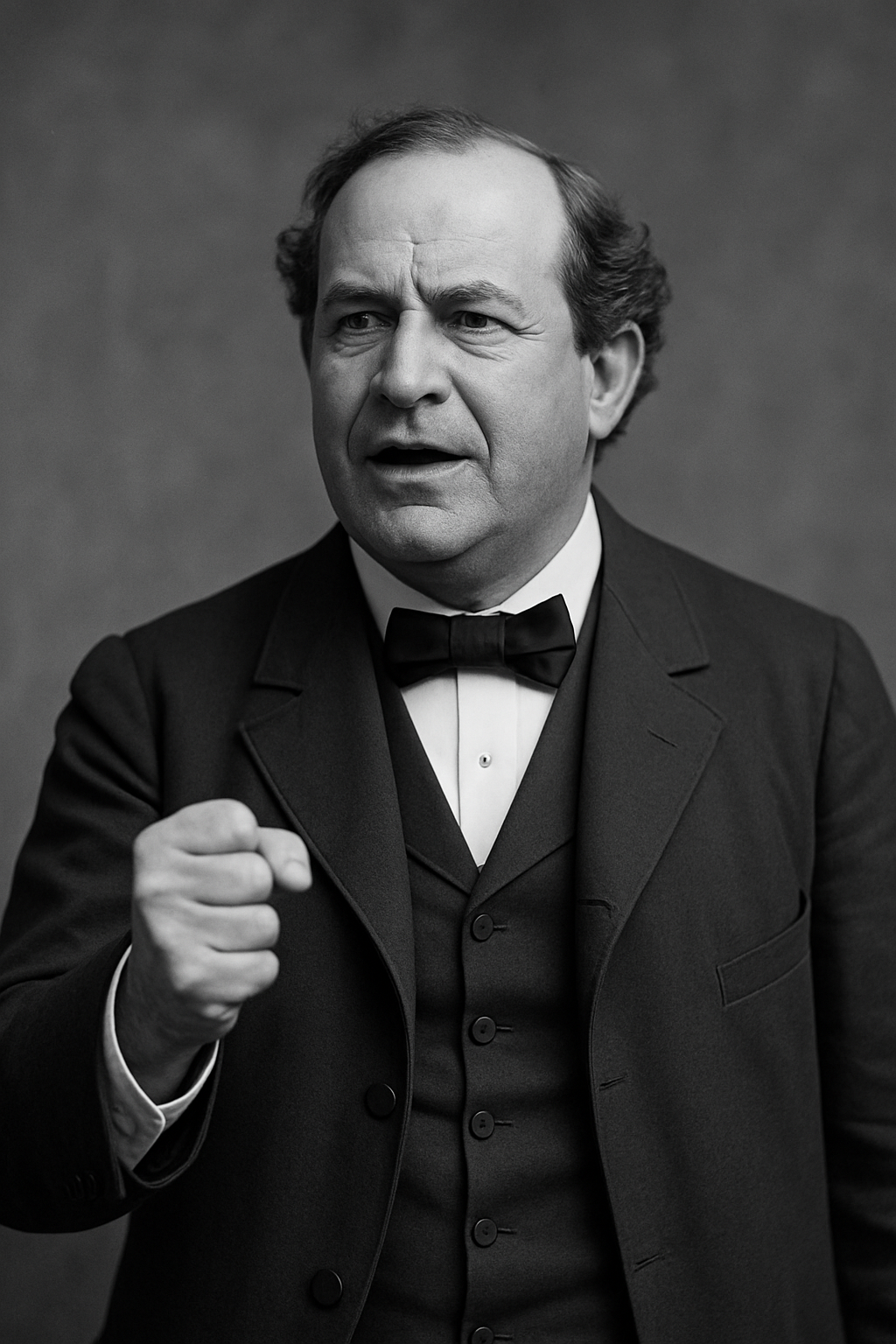
Few figures in American political history have left a legacy as powerful and complex as William Jennings Bryan. Known widely as “The Great Commoner,” he became a symbol of grassroots democracy and moral conviction during a period of rapid social change. Throughout the late nineteenth and early twentieth centuries, Bryan influenced national debates on economic justice, democratic participation, foreign policy, and the moral direction of the country. His voice echoed across political rallies, newspaper headlines, courtrooms, and the national conscience.
This article explores the life, philosophy, and lasting significance of William Jennings Bryan. It examines his famous presidential campaigns, his role in shaping progressive reforms, his distinctive oratorical style, the controversies surrounding his anti imperialist and religious positions, and the legacy he left for future generations. Written in a friendly and conversational yet professional tone, this in depth guide aims to illuminate why Bryan remains a central figure in American political culture.
Early Life and the Shaping of a Reform Mindset
William Jennings Bryan was born in 1860 in Salem, Illinois. He grew up in a family that valued education, faith, and public service. His father, a judge and state senator, exposed Bryan to politics at an early age. This upbringing convinced him that government should promote fairness and reflect moral values.
Bryan’s early education emphasized rhetoric and debate, skills that would later define his political identity. At Illinois College and later at Union Law School, he developed a passion for persuasive argument. From his youth, he believed that words could move public opinion and inspire collective action.
After beginning his law career in Jacksonville, he relocated to Lincoln, Nebraska, where he quickly became involved in state politics. Nebraska, with its farming communities and economic struggles, shaped his understanding of the hardships faced by ordinary Americans. Observing economic inequality and corporate influence firsthand gave Bryan the populist anchor that would guide his political life.
The Rise of a Populist Voice
As Bryan entered national politics, he quickly distinguished himself through his powerful speeches and his moral framing of economic issues. During the 1880s and 1890s, the United States experienced major economic upheaval. Farmers faced mounting debt and falling prices, while industrial corporations gained massive influence. Many Americans felt excluded from economic prosperity.
Bryan emerged as the leading voice of this discontent. He believed that government must protect individuals from unchecked corporate power. His speeches criticised monopolies, financial elites, and policies that burdened working people. He became an advocate for coinage reform, arguing that reliance on gold alone limited currency availability and hurt debt ridden farmers. This issue set the stage for his most famous moment.
The “Cross of Gold” Speech and National Fame
Bryan achieved sudden national prominence at the 1896 Democratic National Convention. As the party debated monetary policy, Bryan delivered his legendary “Cross of Gold” speech. Speaking with dramatic conviction, he argued that the gold standard crucified the working masses on a metaphorical cross. His call for the free coinage of silver electrified the convention hall.
The speech became one of the most famous political addresses in American history. Delegates lifted Bryan on their shoulders and carried him around the convention floor. At just thirty six years old, he secured the Democratic presidential nomination. His candidacy transformed American political communication. He traveled tens of thousands of miles by train, giving hundreds of passionate speeches. While earlier candidates often stayed home and waited for news coverage to deliver their message, Bryan met voters face to face. His campaign style set a precedent for modern retail politics.
Bryan’s Three Presidential Campaigns
Although Bryan never won the presidency, his three campaigns in 1896, 1900, and 1908 reshaped the American political landscape.
The 1896 Campaign
Bryan’s opponent, William McKinley, ran a well financed conservative campaign supported by industrial interests. McKinley’s message emphasized economic stability. Bryan’s crusade for silver coinage and economic reform inspired millions but ultimately fell short. Still, his campaign introduced progressive economic ideas into the national debate.
The 1900 Campaign
Bryan ran again, this time expanding his platform to include opposition to imperialism. He argued that American involvement in the Philippines violated the nation’s democratic values. Although he lost once more, his critiques influenced future foreign policy discussions.
The 1908 Campaign
Bryan’s final run focused on progressive reforms, including campaign finance regulation and corporate oversight. Even in defeat, he pushed the Democratic Party toward positions that would eventually shape the New Deal era.
A Champion of Progressive Reform
Despite never reaching the White House, Bryan profoundly impacted American public policy. Many of the progressive reforms that took shape during the early twentieth century reflected ideas he had championed for years.
Economic Justice
He promoted fair taxation, bank regulation, and protections for farmers and workers. These ideas helped influence later Democratic policy.
Direct Democracy
Bryan supported direct election of senators, a reform that eventually became the Seventeenth Amendment. He also endorsed ballot initiatives and referendums.
Government Accountability
His calls for transparency and regulation of corporations resonated with reform movements that followed.
Bryan’s persistent advocacy pushed progressive ideas into the mainstream. Many reforms that emerged during the administrations of Woodrow Wilson and Franklin Roosevelt bore the imprint of his efforts.
Secretary of State and the Pursuit of Peace
Bryan served as Secretary of State under President Woodrow Wilson from 1913 to 1915. His tenure focused on diplomacy, international arbitration agreements, and efforts to prevent global conflict. He believed deeply in peace, arguing that war betrayed democratic values and harmed ordinary citizens.
Although he resigned in protest when Wilson chose to adopt a more confrontational stance toward Germany during World War One, Bryan’s legacy as a peace advocate remains significant. His diplomacy reflected his moral belief that nations should seek solutions without resorting to violence.
Bryan’s Role in the Scopes Trial
One of the most famous moments of Bryan’s later life was his involvement in the 1925 Scopes Trial. Often called the “Monkey Trial,” it centered on the teaching of evolution in public schools. Bryan participated as part of the prosecution, arguing that communities had the right to decide what should be taught to their children.
His position reflected his religious convictions and his view that modern science needed moral boundaries. During the trial, Bryan faced legendary defense attorney Clarence Darrow in a dramatic courtroom exchange. Although the trial ended with a symbolic victory for anti evolution laws, the event is often remembered as a cultural clash between modern science and traditional religious beliefs.
While many interpret Bryan’s role as anti intellectual, it is more accurate to say that he viewed unrestrained scientific progress as potentially harmful when separated from ethical considerations. His involvement in the trial continues to spark debate about religion, education, and public policy.
Oratory, Communication, and the Power of Words
One of Bryan’s greatest gifts was his oratory. Newspapers of the era described his speeches as emotionally stirring, morally driven, and deeply poetic. His style combined storytelling, moral argument, and clear emotional appeal. He spoke to the imagination as well as the intellect.
Bryan’s speeches helped him connect with everyday Americans. He traveled extensively, delivering speeches in small towns and major cities alike. He believed that democracy required communication between leaders and ordinary citizens. In many ways, he helped invent the style of direct public engagement that remains central to American campaigning.
Bryan’s Influence on American Politics
Although he never became president, Bryan shaped the Democratic Party for decades. Many of the policies he championed formed the backbone of the progressive movement. Some historians even call him a philosophical ancestor of Franklin Roosevelt, since many New Deal reforms echoed Bryan’s earlier proposals.
His influence includes:
-
The rise of populist rhetoric
-
Greater focus on economic inequality
-
Expansion of democratic participation
-
A shift toward reform minded party platforms
-
Use of national speaking tours as a political tool
Bryan also helped elevate issues of morality and ethics within public debate. Whether discussing economic policy or foreign affairs, he framed political questions in moral terms. This approach continues to influence political communication today.
Why William Jennings Bryan Still Matters
Understanding Bryan’s life offers valuable insight into American political culture. Many of the issues he engaged with remain central today, including:
-
Debates about economic fairness
-
Conflicts between populism and corporate power
-
Tensions between tradition and modern innovation
-
Questions about the purpose of government
-
The influence of religion in public life
Bryan’s blend of populism, idealism, and moral conviction makes him a fascinating figure for historians, political scientists, and anyone interested in democratic engagement.
A Legacy of Principle and Passion
William Jennings Bryan stands out as a political leader driven not by wealth or personal ambition, but by a powerful belief in justice and democratic values. His speeches inspired millions. His campaigns reshaped political norms. His advocacy pushed crucial reforms into the national spotlight. Even where he faced defeat, he refused to abandon his principles.
Although some of his ideas remain controversial, his commitment to public service and democratic participation continues to resonate. Bryan’s life invites us to consider the power of conviction, the importance of listening to ordinary citizens, and the role of moral philosophy in political decision making.
He remains a man who embodied passion, sincerity, and an unwavering belief that government should serve the people. His life reminds us that political influence is not measured only by electoral victories. Sometimes it is measured by the ideas that take root and shape future generations.