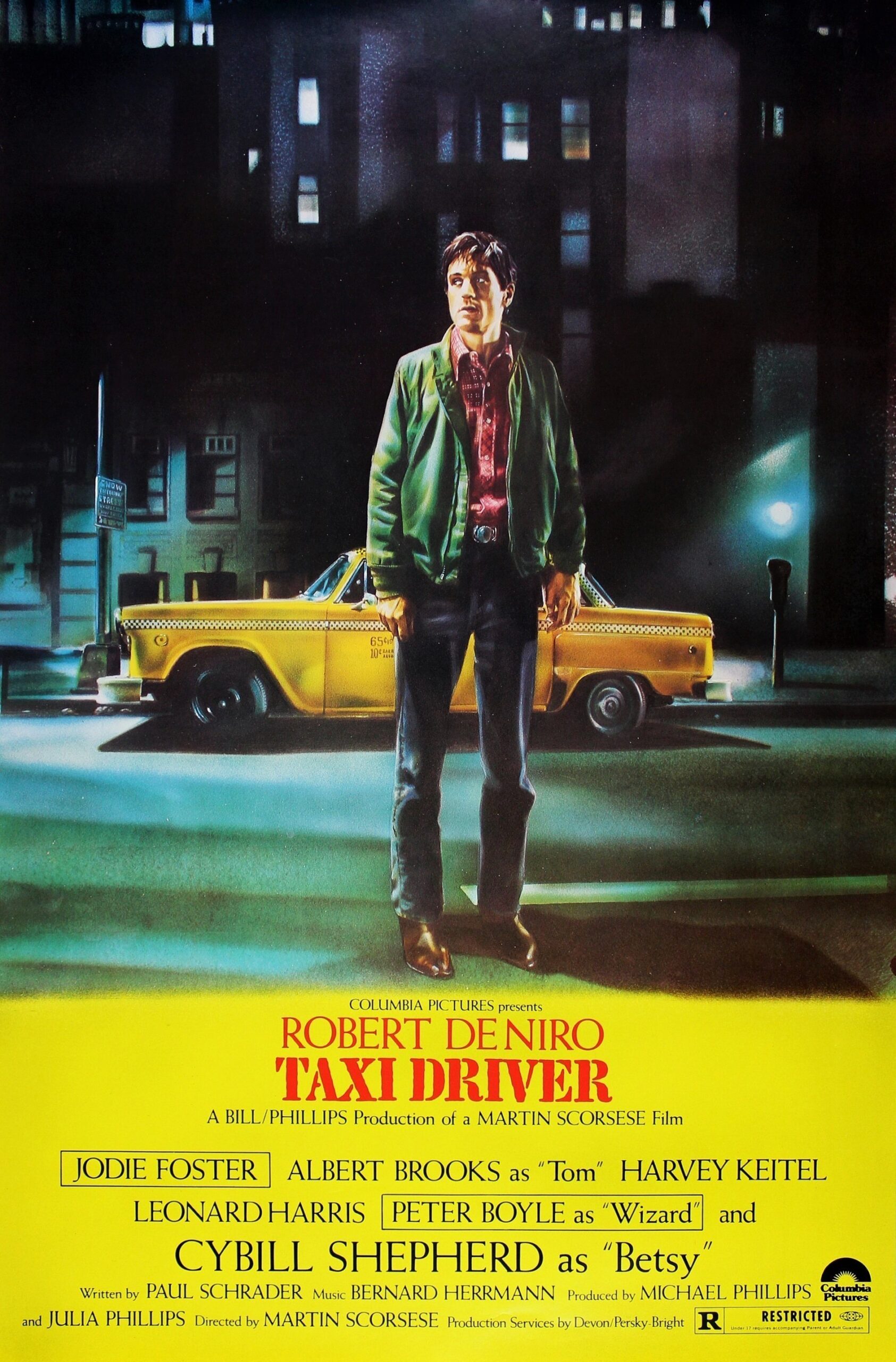
Few films in modern cinema history have left as deep a cultural mark as Taxi Driver (1976). Directed by Martin Scorsese and written by Paul Schrader, the film paints a haunting portrait of urban isolation, moral confusion, and psychological decay in a post-Vietnam America. But while Scorsese’s direction and Schrader’s script form the backbone of this classic, it is the cast that gives Taxi Driver its unforgettable intensity and realism.
Each actor brings authenticity, depth, and humanity to the film’s gritty New York setting. From Robert De Niro’s haunting portrayal of Travis Bickle to Jodie Foster’s brave performance as Iris, every member of the ensemble contributes something vital. This article takes an in-depth look at the Taxi Driver cast — their characters, performances, and the legacy they created in one of cinema’s most powerful character studies.
Robert De Niro as Travis Bickle
At the center of Taxi Driver stands Robert De Niro’s Travis Bickle — a lonely, insomniac Vietnam veteran who drives a cab through the streets of New York City. His alienation and slow descent into violence form the film’s narrative spine.
De Niro delivers one of the most acclaimed performances in American cinema. His portrayal of Travis is at once deeply disturbing and strangely sympathetic. He embodies a man disconnected from society yet desperate for purpose. Every moment of silence, every twitch of discomfort, tells a story of inner turmoil.
To prepare for the role, De Niro famously obtained a taxi driver’s license and drove real New York City cabs between film shoots. This immersion in the environment brought authenticity to his performance. His physical transformation — the shaved head, gaunt face, and sharp intensity — became instantly iconic.
The line “You talkin’ to me?” was improvised by De Niro, and it became one of the most quoted phrases in film history. That single moment captures Travis’s fractured psyche: his yearning for recognition mixed with deep alienation.
De Niro received an Academy Award nomination for Best Actor, cementing his reputation as one of the greatest performers of his generation.

Jodie Foster as Iris Steensma
Jodie Foster’s portrayal of Iris, a 12-year-old girl trapped in child prostitution, is astonishing for its emotional depth and maturity. Despite her young age, Foster displayed poise, bravery, and sensitivity in one of the most controversial roles ever given to a child actor.
Iris becomes Travis’s obsession — the innocent soul he believes he must rescue to cleanse a corrupt world. Their interactions are among the most powerful in the film. In one memorable scene, Iris and Travis share breakfast at a diner, where he awkwardly urges her to leave her life behind. Foster’s subtle expressions reveal Iris’s mix of confusion, resilience, and vulnerability.
To protect Foster during filming, a social worker and Foster’s older sister were present on set. Many of her scenes were shot under strict supervision, reflecting how groundbreaking and delicate her role was for its time.
Her performance earned her an Academy Award nomination for Best Supporting Actress, making her one of the youngest nominees in Oscar history. It also launched her into a lifelong career of bold, intelligent roles that would later include The Silence of the Lambs and Contact.
Harvey Keitel as Sport
Harvey Keitel plays Matthew, better known as “Sport,” the smooth-talking pimp who controls Iris and represents everything Travis despises about the city’s corruption. Keitel’s portrayal is chillingly charismatic, giving Sport an unsettling charm that makes his cruelty even more disturbing.
Originally, the role of Sport was written as a short, minor character. Keitel expanded it through improvisation and collaboration with Scorsese, transforming Sport into a memorable antagonist. He even rewrote parts of his dialogue and choreographed his gestures to make Sport appear both seductive and menacing.
Keitel’s chemistry with Foster adds depth to their scenes together. He portrays Sport as manipulative yet oddly paternal, heightening the tension between exploitation and twisted affection. His presence gives the film’s final act a tangible sense of menace, setting the stage for Travis’s violent rampage.
Cybill Shepherd as Betsy
Cybill Shepherd’s Betsy represents the illusion of purity and normalcy in Travis’s chaotic world. As a campaign worker for Senator Charles Palantine, she embodies grace, ambition, and confidence — qualities Travis both admires and misunderstands.
Their relationship begins with awkward fascination. Travis idealizes Betsy as a “goddess” amid the city’s decay, but his inability to navigate normal social interactions leads to one of the film’s most infamous scenes: he takes her to a pornographic theater for their first date.
Shepherd’s poised and restrained performance is crucial. Her polite rejection of Travis after that date marks a turning point in his psychological breakdown. Betsy’s detachment mirrors the distance between Travis and the world around him — a reminder that his loneliness is not just circumstantial but deeply psychological.


Albert Brooks as Tom
Before becoming known as a filmmaker and comedian, Albert Brooks delivered a grounded, realistic performance as Tom, Betsy’s witty and protective coworker. Brooks brings subtle humor and humanity to his role, balancing the film’s darker tones.
Tom functions as the everyman — normal, rational, and quietly empathetic. His presence contrasts sharply with Travis’s social awkwardness. Brooks’s understated acting helps humanize the world Travis cannot understand, giving audiences a glimpse of what stability might look like.
Brooks’s background in stand-up comedy and improvisation added authenticity to his dialogue, giving the film natural rhythm in scenes that could have felt overly scripted.
Leonard Harris as Senator Charles Palantine
Leonard Harris, a real-life New York television commentator with no prior acting experience, was cast as Senator Charles Palantine. His calm demeanor and confident speech perfectly suit a politician campaigning for reform amid urban decay.
For Travis, Palantine becomes both a potential savior and a target. Travis initially admires the senator, imagining that Palantine represents moral order, but his disillusionment grows until he contemplates assassinating him.
Harris’s composed performance provides balance to the chaos surrounding Travis. His character embodies authority, public optimism, and political detachment — qualities that underscore the gap between societal ideals and personal despair.
Peter Boyle as Wizard
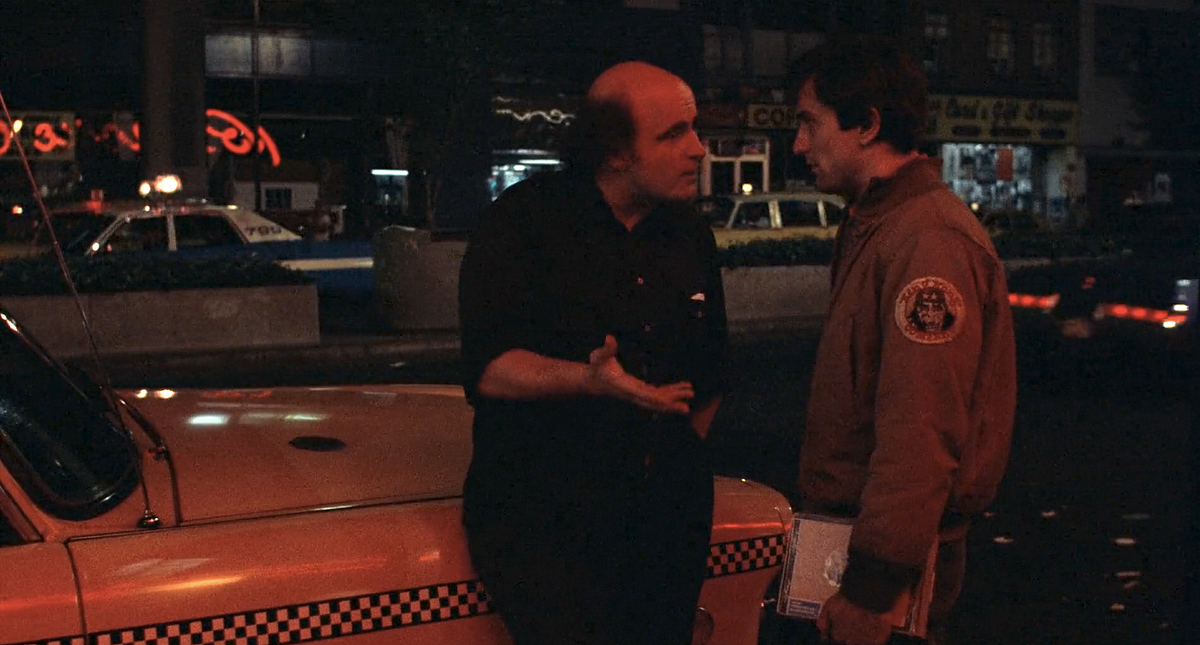
Peter Boyle brings warmth and depth to the role of Wizard, an older taxi driver who befriends Travis. In one of the film’s most memorable scenes, Wizard offers Travis fatherly advice, attempting to comfort him with words like, “You’re a young man, you’re in your prime.”
Wizard represents the voice of experience — someone who understands the city’s grime but has learned to live with it. His inability to grasp Travis’s growing instability, however, highlights how society often overlooks mental distress until it’s too late.
Boyle’s subtle humor and empathy make Wizard a small but essential part of the film’s emotional fabric. His character reminds viewers that even in the darkness of Taxi Driver, there are glimpses of human kindness.
Supporting Cast and Cameos
While the main cast dominates the story, Taxi Driver also features a series of smaller but impactful performances:
-
Harry Northup as Doughboy, another cab driver who shares the night shift with Travis.
-
Norman Matlock as Charlie T., representing the working-class heartbeat of the cab company.
-
Gino Ardito as the Hotel Clerk, capturing the city’s rough humor and indifference.
-
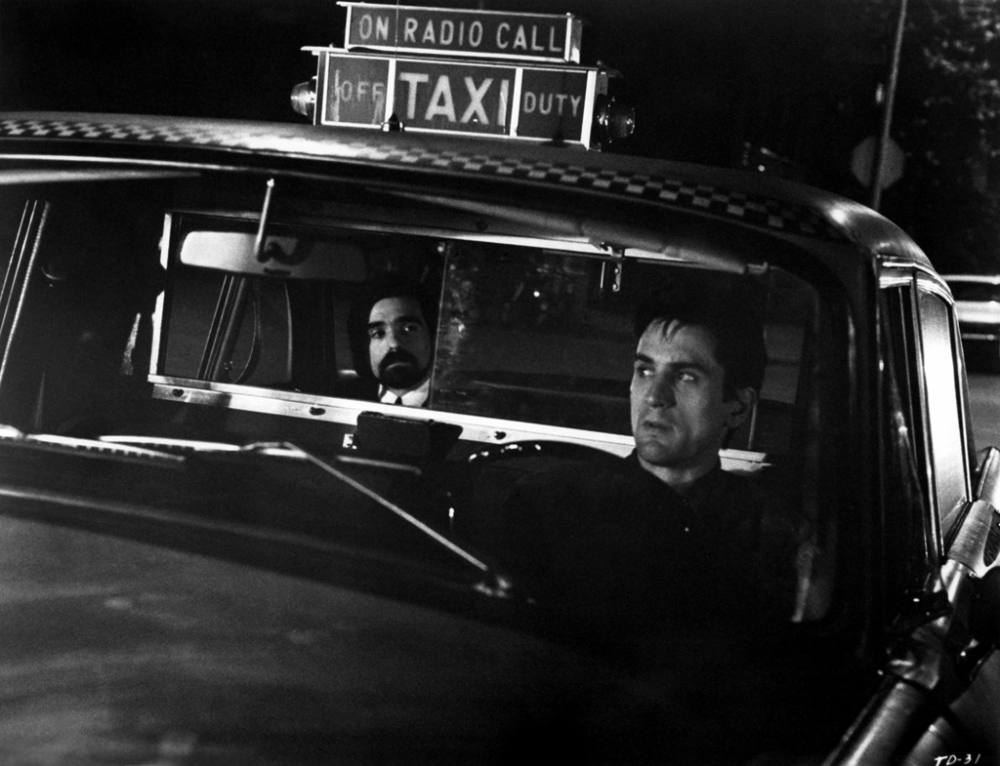
Martin Scorsese himself appears in a brief but unforgettable cameo as a passenger who speaks ominously of his plans for revenge — a moment that mirrors Travis’s own descent.
Each minor role adds texture to the film’s world, creating a believable portrait of 1970s New York City.
Chemistry and Direction
The chemistry among the Taxi Driver cast is remarkable, due largely to Scorsese’s directing style. He encouraged improvisation, emotional honesty, and raw realism. The result was dialogue that felt spontaneous and performances that captured the unpredictable energy of urban life.
De Niro and Foster’s scenes are quietly devastating, while Keitel’s interactions with both bring intensity and danger. Shepherd’s distance contrasts beautifully with De Niro’s yearning, and Boyle’s warmth makes his scenes especially poignant. Together, the cast gives the film its emotional balance — shifting between despair and brief glimpses of compassion.
How Casting Choices Shaped the Film
The casting of Taxi Driver was not merely about matching actors to roles. Each performer was chosen to embody a social archetype within the decaying ecosystem of 1970s New York:
-
Travis (De Niro): The alienated veteran and everyman outsider.
-
Betsy (Shepherd): The unreachable ideal.
-
Iris (Foster): Innocence corrupted by urban decay.
-
Sport (Keitel): Exploitation personified.
-
Wizard (Boyle): The weary voice of survival.
-
Palantine (Harris): The distant, political facade of hope.
Together, these archetypes create a psychological landscape where Travis’s inner conflict mirrors the social unrest of his environment.
Behind-the-Scenes Trivia
-
De Niro gained about twenty pounds for his later role in Raging Bull, but for Taxi Driver he lost weight and trained extensively with firearms to prepare for the climactic scenes.
-
The infamous “mohawk” haircut was De Niro’s idea, symbolizing Travis’s transformation from disillusionment to violent purpose.
-
Jodie Foster’s older sister, Connie Foster, served as her stand-in for certain scenes deemed too mature.
-
Harvey Keitel spent time on New York streets to study pimps and their mannerisms, even choreographing Sport’s dance-like movements to music.
-
The blood-soaked finale had to be desaturated in color to avoid an X-rating from the Motion Picture Association.
These creative details reveal how far the cast and crew went to achieve authenticity and emotional impact.

The Cast’s Lasting Legacy
Nearly fifty years after its release, Taxi Driver remains a touchstone of modern cinema. Much of that legacy comes from its cast:
-
Robert De Niro became synonymous with method acting and psychological depth.
-
Jodie Foster proved that young actors could tackle serious, complex roles.
-
Harvey Keitel continued his collaboration with Scorsese in films like Mean Streets and The Irishman.
-
Peter Boyle transitioned into a respected character actor and later into beloved comedy roles.
-
Cybill Shepherd’s poised performance helped define the sophisticated female archetype in 1970s cinema.
Their collective work gave Taxi Driver emotional truth — transforming a gritty screenplay into an enduring work of art.
Themes Reflected Through the Cast
Each member of the Taxi Driver cast plays a vital role in exploring the film’s larger themes:
-
Isolation: Travis’s loneliness is mirrored in his interactions with every character, from Betsy’s rejection to Iris’s confusion.
-
Corruption: Keitel’s Sport and Palantine’s politics both symbolize systems that exploit or ignore others.
-
Redemption: Iris offers Travis a final chance at moral clarity, even if achieved through violence.
-
Reality vs. Delusion: Each performance blurs the line between the real and imagined world Travis inhabits.
By embodying these themes so vividly, the cast ensures that Taxi Driver resonates on both a psychological and social level.
Conclusion
The Taxi Driver cast transformed a dark, introspective script into one of the most enduring films in American history. Each performance — from De Niro’s haunting intensity to Foster’s emotional bravery — builds a mosaic of loneliness, longing, and rage that feels as relevant today as it did in 1976.
What makes this ensemble remarkable is not just their individual talent but their collective authenticity. Together, they reflect the fractured humanity of a city and a nation searching for meaning.
Nearly five decades later, Taxi Driver remains a masterpiece of casting and character — proof that great cinema is not only written or directed but deeply lived through the people who bring it to life.